aboutYour body can cooperate better. We’ll prove it in 120 seconds.
Q-Technology: passive, non-invasive technologies you can test in a clinical setting — posture, stability, comfort, and functional EMF support, proven right in front of you.
Story
Why Q-Technology exists
There are two ways to invent something useful: from a cold laboratory, or from a human emergency. Q-Technology is the second kind.
I started with pain. I’ve been a patient, a researcher, and a practitioner. I’ve seen what breaks real practice: promises, gadgets, tools that sound right but don’t hold up. So I decided to stop talking — and start proving.
What came next wasn’t artistic: it was trials, failures, sleepless nights, and constant hard resets. We took a micro-circuit, a strange material, and a lot of hypotheses — and pushed them until we got a measurable answer. That became Q-Alpha. Then Q-Theta. Then Q-Omega. And finally the accessible entry point: Q-Go. (Detailed R&D and scientific narrative available on request.)
THE TECH TRILOGY
Q-Alpha → Q-Theta → Q-Omega → Q-Go
Q-Alpha — the first key. An obvious breakthrough. A translation between engineering and biology. It revealed something huge: in our protocols, ~40% of people reached a “perfect” postural correction according to our internal criteria. A success — but not the finish line.
Q-Theta — the leap. By combining Alpha and Theta results, we pushed the correction rate to ≈75% across our series. Q-Theta is a translation of the planetary reference frame — a return to the body’s “ground.”
Q-Omega — for overloaded systems. As the world changed (EMF, lifestyle), some profiles stopped responding as well to earlier versions. Q-Omega isn’t “stronger to do better”: it’s built to make a complete informational language coherent when the system is saturated. Q-Omega combines Q-Alpha and Q-Theta. It works — but not for everyone. Like all our “pro” technologies, it requires testing.
Q-Go — the entry point. Not a “lite” version, but a technology engineered to be universal and immediately usable with no prior test. Q-Go stabilizes the baseline, makes access to Q-Pro calibration easier, and ensures robustness in real life. It’s the engineering answer that makes the essentials accessible.
Watch videoWatch video
We document — we don’t sell illusions. Our numbers come from internal functional observations, our protocols are available to academic partners on request, and we train practitioners to avoid errors.
The patient is never left to chance: the clinical decision belongs to the Certified Tester.
founderTHE HUMAN BEHIND THE MACHINE
Nicolas Desjardins
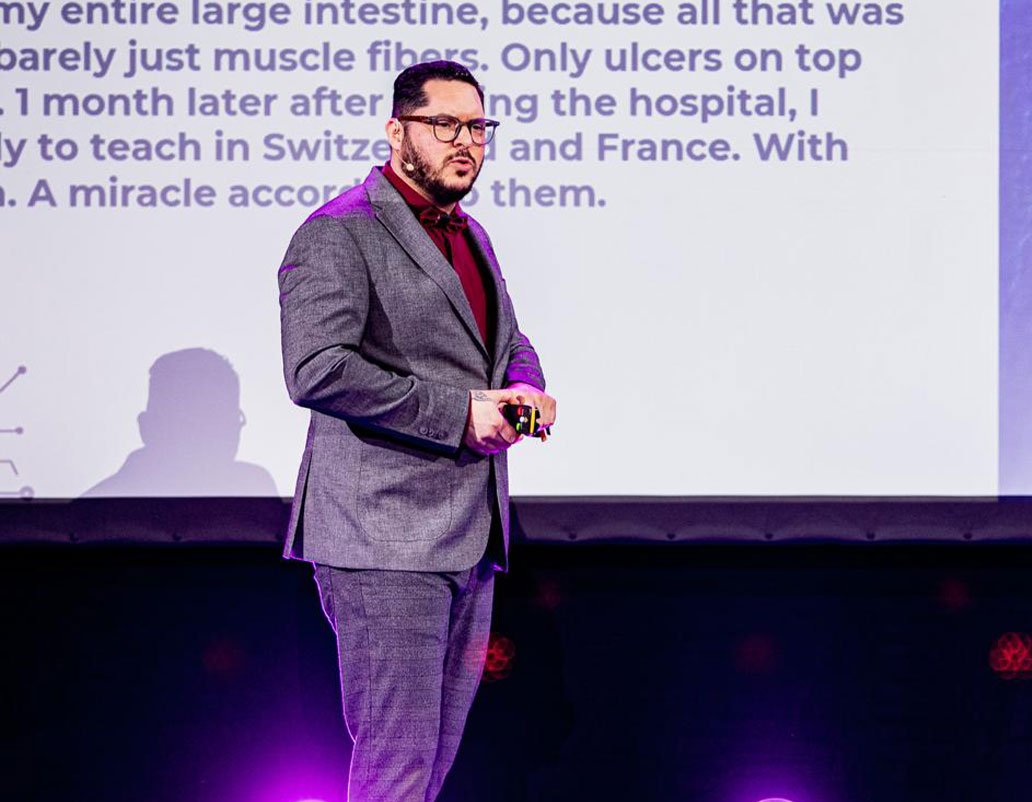
I’m Nicolas Desjardins — an integrative medicine doctoral candidate, founder of Academia NeuEra and Q-Technology. I have 17+ years of clinical practice, over 8,000 hours of training, doctorates, and conferences worldwide. I’ve been a patient and a researcher; I’ve built clinical protocols and tools to make them reproducible and responsible.
We train Testers (Junior → Senior → Master), certify remotely, and guarantee rigor: no improvisation — only documented, auditable protocols.
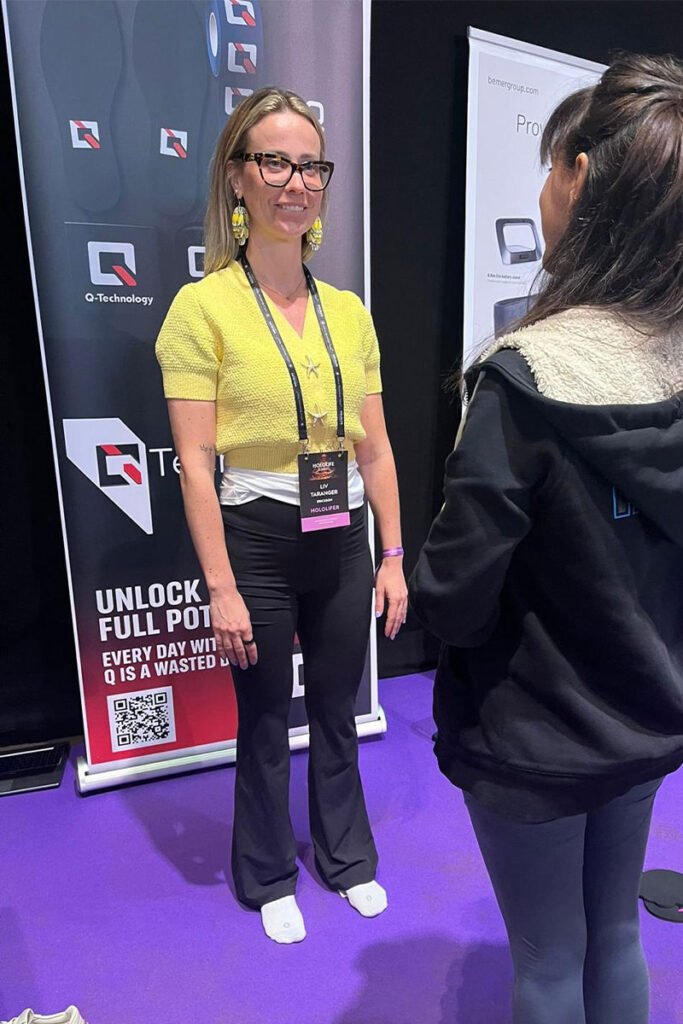
Place Q-Go, wait ~20 seconds, then run balance/mobility/strength tests before/after
Goal: show an immediately observable functional difference
Perfect Posture Test (Q-Pro) = assessment + calibration
Full pathway: measurements without technology, then trials of Q-Alpha/Q-Theta/Q-Omega according to protocol, with before/after observation
Q-Alpha delivers an almost immediate effect; Q-Theta and Q-Omega take a few seconds to deploy
Result: the Certified Tester selects the optimal configuration — this is a clinical act, not self-selection (procedure and timing detailed for Certified Testers)
Both are complementary: the 120s demo lets the person experience change, while the Perfect Posture Test evaluates which technology best matches the person’s neuromuscular system.